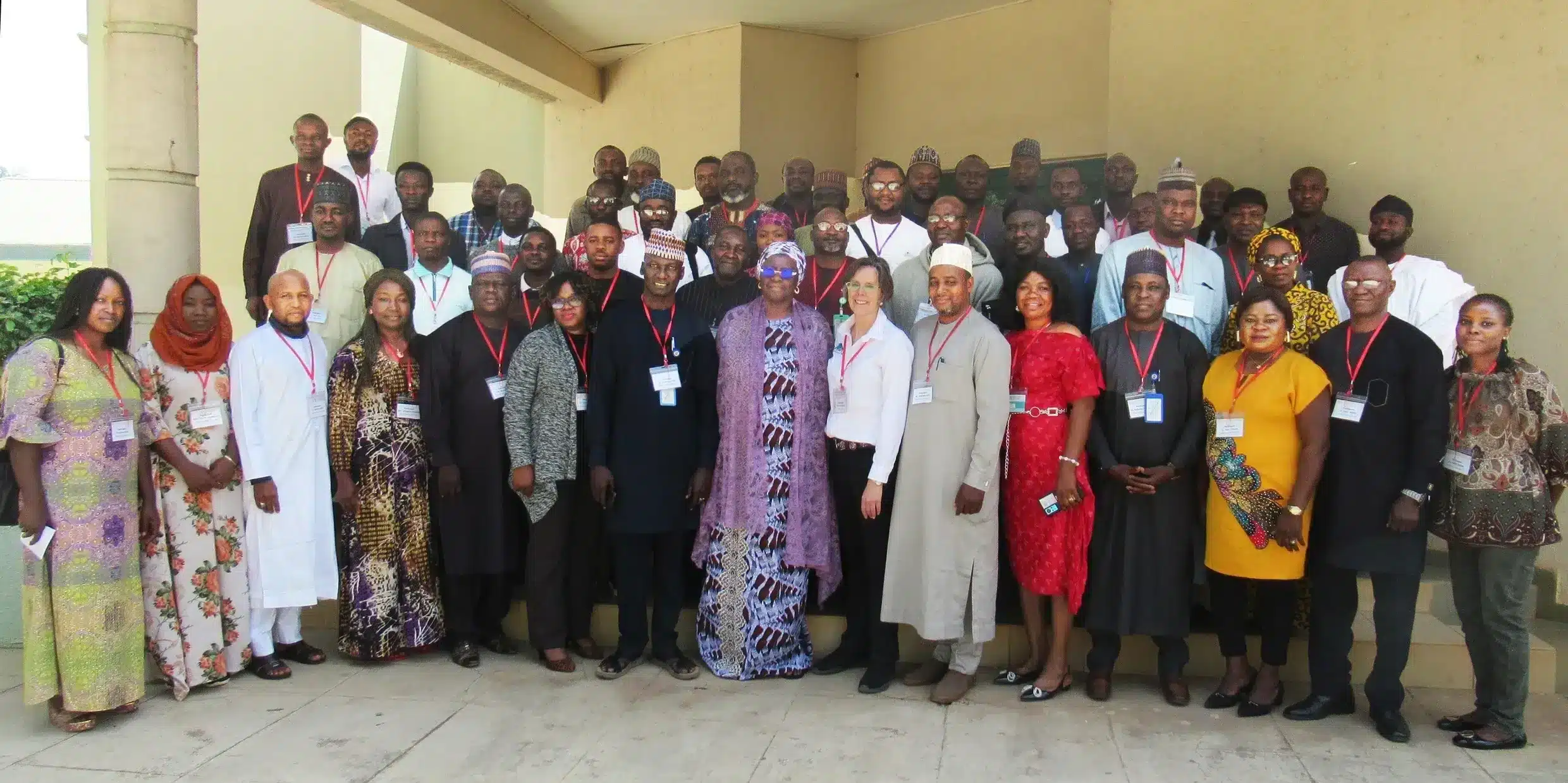
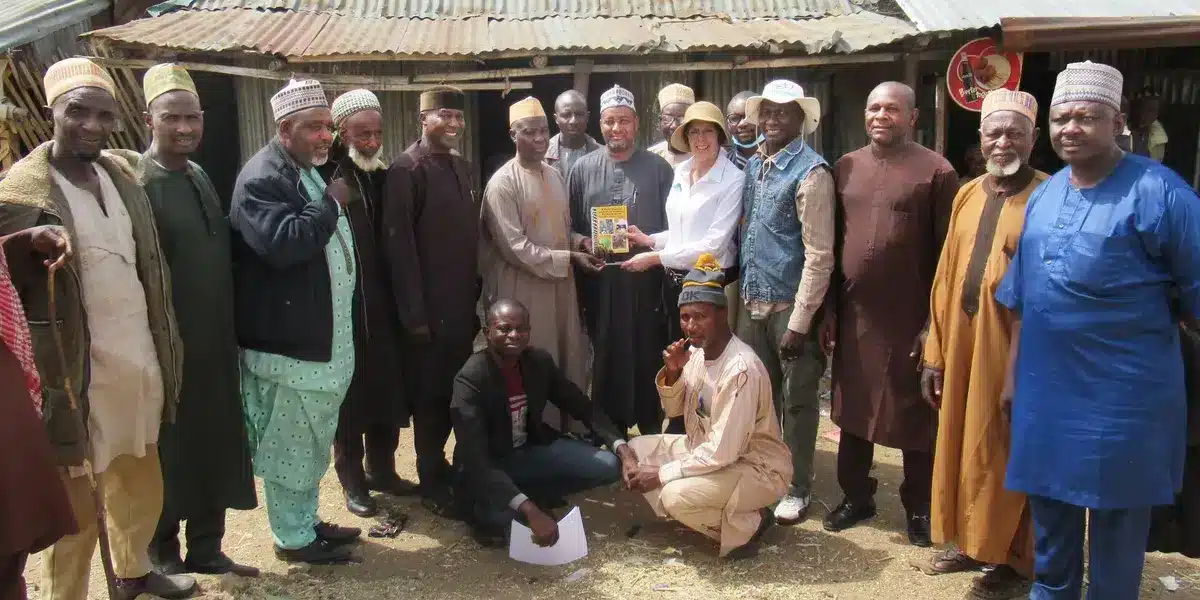
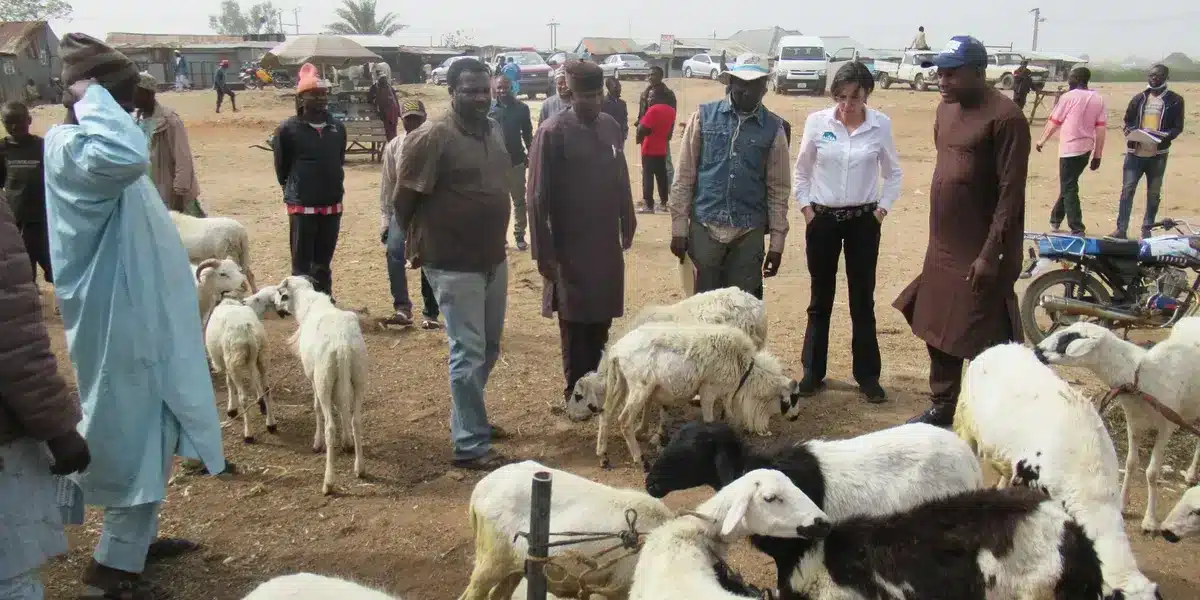
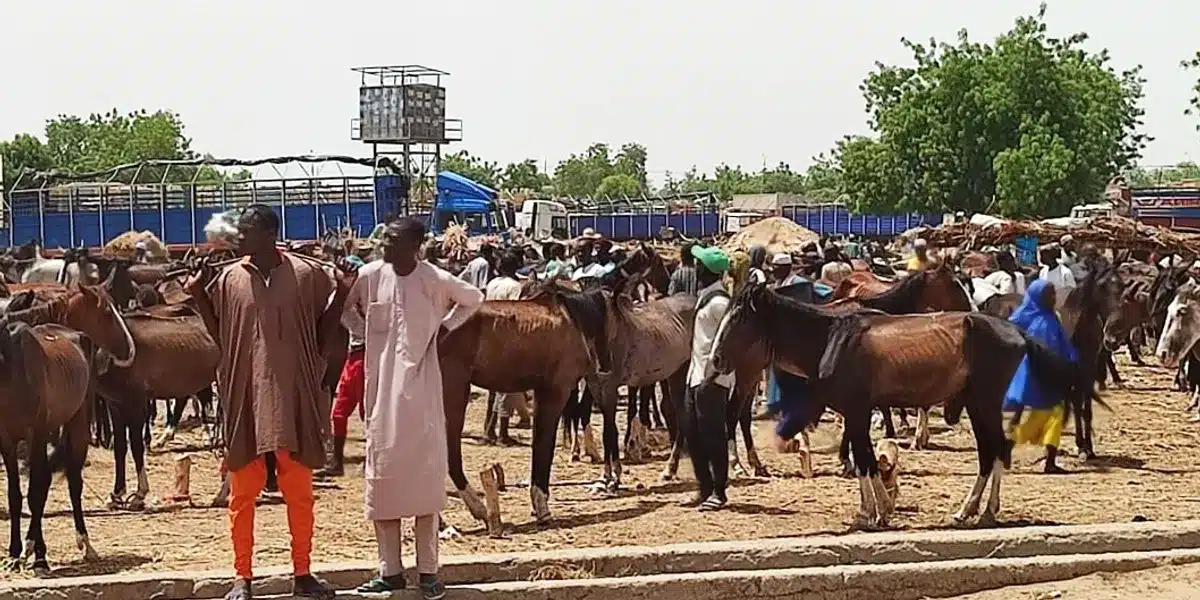
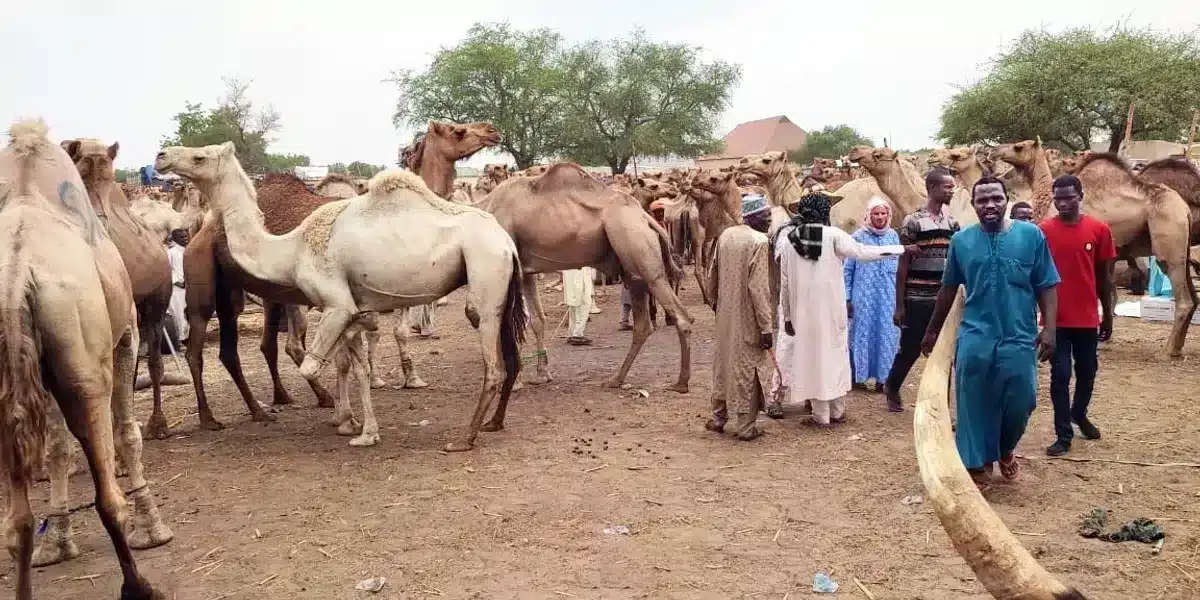
PROJECT #1 and 2 (combined, 2023-2024): Sampling at Nigeria’s border markets for Transboundary and Emerging Zoonotic Diseases, over two seasons, wet and dry
This two-year project has resulted in four publications to date, thanks to Dr. Ehizibolo’s amazing diligence and expertise!
PUBLICATION: Ehizibolo, D.O.; Oyekan, O.; Mkpuma, N.; Gado, D.A.; Turaki, I.Z.; Haliru, H.; Garba, I.; Williams, E.E.; Kennedy, S.; Abdullahi, A.; Akawu, B.; Dogonyaro, B.; Shallangwa, J.; Kilyobas, C.; Gregory, I.; Auta, N.; Kussiy, M.; Mohammed, A.; Muhammad, M.; Abubakar, M.; Shittu, A.; Muhammad, M.; Brown, C.; Faburay, B.. Seroprevalence of Crimean-Congo Hemorrhagic Fever and Rift Valley Fever Viruses Among Ruminants in Nigeria: A Descriptive Epizootiological Analysis. Pathogens 2025, 14, 1219.
https://doi.org/10.3390/pathogens14121219
A longitudinal serological survey was conducted in five major livestock markets across Nigeria. A total of 3450 animals (cattle, sheep, and goats) were tested for Crimean-Congo hemorrhagic fever virus (CCHFV) and Rift Valley fever virus (RVFV) antibodies using ELISA. Cattle showed the highest prevalence for both CCHFV (55.4%) and RVFV (11.2%), followed by sheep (17.4% and 2.9%) and goats (8.6% and 3.4%). The findings highlight the risk of zoonotic spillover, particularly in livestock markets with intense human-animal interaction.
PUBLICATION: Ehizibolo DO, Oyekan O, Mkpuma N, Haliru H, Gado DA, Turaki IZ, Garba I, Williams EE, Danmarwa A, Onoja M, Ardo A, Akawu B, Mohammed A, Muhammad MA, Abubakar M, Shittu A, Sajo MU, Muhammad M, Brown C, Faburay B. High Seroprevalence and Risk Factors of Crimean-Congo Hemorrhagic Fever Virus in Camels at Livestock Markets in Border Regions, Nigeria, 2023-2024. Vector Borne and Zoonotic Diseases. 2026 Feb 4: https://doi.org/10.1177/15303667261420069
From June 2023 to July 2024, 812 camels were sampled during 54 weekly visits to Maiduguri (Borno), Maigatari (Jigawa), and Illela (Sokoto) livestock markets. CCHFV antibodies were detected in 89.4% of camels (95% CI: 87.1-91.4%). The very high seroprevalence observed in camels suggests that they may contribute to the epidemiology of CCHF in northern Nigeria. Although cultural practices such as consumption of raw camel milk and urine are common, their role in CCHFV transmission remains uncertain; therefore, further studies are recommended to investigate their potential epidemiological significance.
PUBLICATION: Ehizibolo DO, Oyekan O, Mkpuma N, Haliru H, Garba I, Turaki IZ, Williams E, Danmarwa A, Mohammed A, Muhammad M, Abubakar M, Brown C, Faburay F. Rift Valley Fever Virus Exposure in Camels and Horses Across Northern Nigeria Livestock Markets. Pathogens. 2026.15(3), 258. https://doi.org/10.3390/pathogens15030258
This study investigated the seroprevalence of Rift Valley Fever Virus (RVFV) exposure and associated risk factors among camels and horses marketed in northern Nigeria. A total of 1117 animals were sampled, comprising camels (812) and horses (305), across three major livestock markets (Maigatari, Maiduguri, and Illela). Camels showed a prevalence of 24.4% (95% CI: 21.6–27.4%), while horses exhibited only 3.9% (95% CI: 2.1–7.0%). These findings demonstrate endemic RVFV circulation in Nigerian livestock, and underscore the zoonotic risks within regional and transboundary livestock trade networks.
PUBLICATION: Ehizibolo, D.O.; Oyekan, O.; Mkpuma, N.; Gado, D.A.; Turaki, I.Z.; Haliru, H.; Garba, I.; Williams, E.E.; Kennedy, S.; Abdullahi, A.; Akawu, B.; Dogonyaro, B.; Shallangwa, J.; Kilyobas, C.; Gregory, I.; Auta, N.; Kussiy, M.; Mohammed, A.; Muhammad, M.; Abubakar, M.; Shittu, A.; Muhammad, M.; Brown, C.; Faburay, B.. Seroprevalence of Crimean-Congo Hemorrhagic Fever and Rift Valley Fever Viruses Among Ruminants in Nigeria: A Descriptive Epizootiological Analysis. Pathogens 2025, 14, 1219. https://doi.org/10.1111/zph.70056
From June 2023 to July 2024, a longitudinal sero-surveillance study was conducted in three high-volume livestock markets in northern Nigeria. Serum samples from 808 equids (305 horses and 503 donkeys) were tested for CCHFV-specific IgG antibodies using a commercial multi-species ELISA. Overall seroprevalence was 23.1% (95% CI: 20.3–26.2%), with higher seroprevalence in horses (52.1%) than in donkeys (5.7%). These findings indicate widespread CCHFV exposure among equids and suggest that horses may serve as useful sentinel animals for monitoring CCHFV circulation in livestock trade corridors.
PENDING – PROJECT #3: Integrated Surveillance for Rift Valley Fever Virus (RVFV), Crimean-Congo Hemorrhagic Fever Virus (CCHFV), and Major Transboundary Animal Diseases in High-Risk Flooded Regions of Nigeria
Our Partners

Dr. David Ehizibolo

Dr. Maryam Muhammad